
Glues, gases and aerosols
A wide range of glues, gases, solvents and aerosols containing volatile substances, which people inhale to get high.
Also called:
- Aerosols
- Butane
- Chroming
- Dusting
- Gas
- Gases
- Glue sniffing
- Glues
- Huffing
- Inhalants
- Petrol
- Solvents
- Tooting
- Volatile substances
What does it look like?
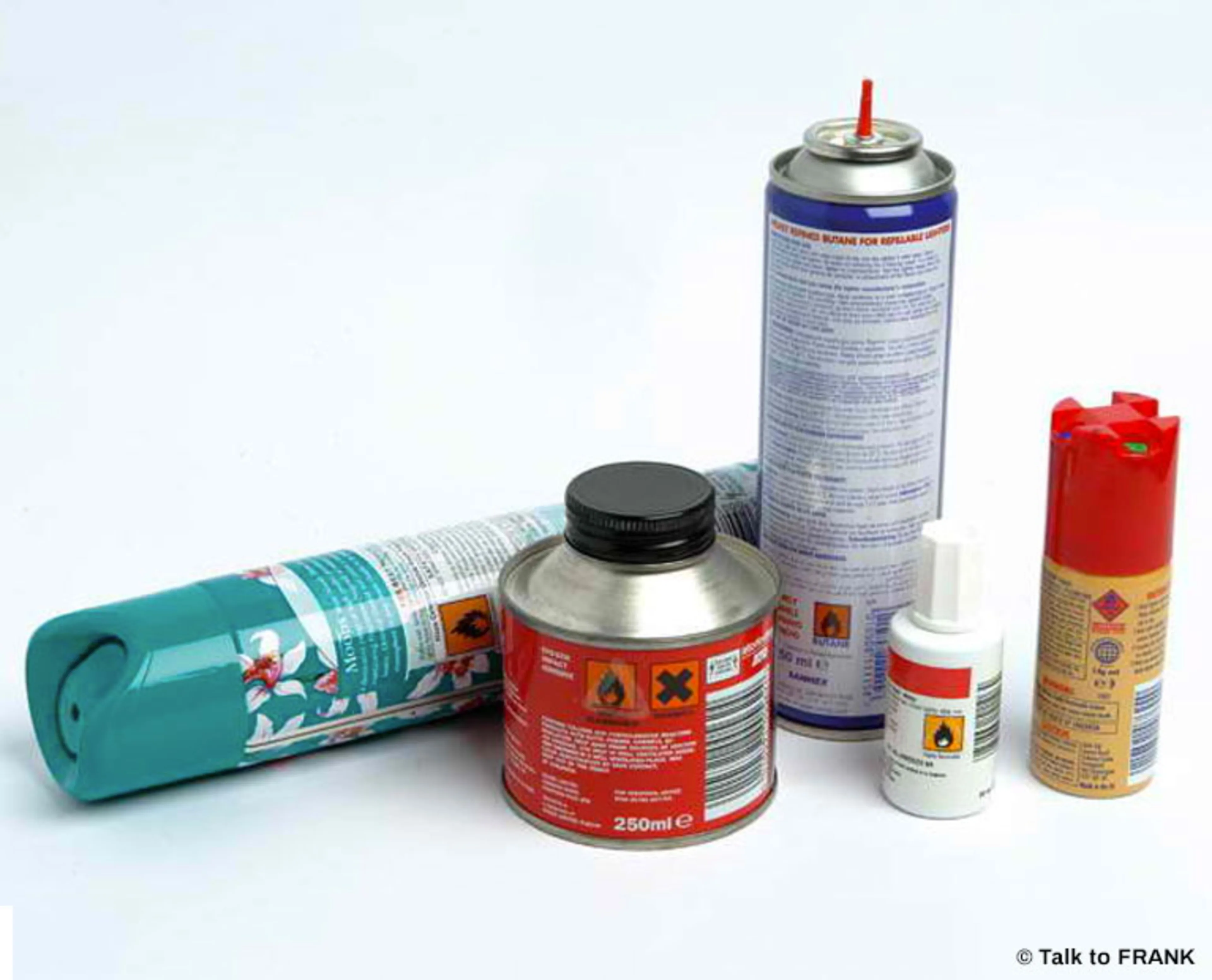
There are lots of glues, gases, and aerosols which, when inhaled, can cause you harm. Many are normal household products – such as:
- butane gas lighter refills
- aerosols containing hairspray
- deodorants and air fresheners
- tins or tubes of glue
- some paints, thinners and correcting fluids
- cleaning fluids
- surgical spirit
- petrol
Glues, gases, solvents, and aerosols are breathed in or inhaled from something acting as a container or holder.
There are several different ways to do this, but whatever method is used, it is difficult to control the dose and all methods are potentially fatal.
The risk is greater if used in an enclosed space or if a plastic bag is used that covers both the nose and mouth. The risk is also increased when inhaling directly from a butane cigarette lighter refill.
How does it make you feel?
Glues, gases, solvents, and aerosols contain volatile substances which are depressants, which means they slow down your brain and body’s responses and produce a similar effect to being drunk.
The effects can vary from person to person and depend on what specific glue, gas, solvent or aerosol has been used, but the common effects can include:
Feeling like being drunk with dizziness, dreaminess, fits of the giggles, and difficulty thinking straight.
Getting a hangover afterwards – such as a severe headache, feeling tired and/or feeling depressed.
How does it make people behave?
The effects can vary from person to person and depend on what specific glue, gas, solvent, or aerosol has been used, but the common effects can include:
- mood swings
- aggressive behaviour
- hallucinations
- vomiting and blackouts
How long the effects last and the drug stays in your system depends on how much you’ve taken, your size and what other drugs you may have also taken.
How long it lasts
How long the effect of glues, gases, solvents or aerosols lasts varies and some users tend to keep repeating the dose to keep the feeling going.
In the case of butane, the effects can last up to 30 minutes.
Physical health risks
Because glues, gases, solvents and aerosols are available as household products, some people think they are safe to use, but they’re not.
There are over 50 deaths a year involving glues, gases, solvents and aerosols. Of the substances, butane is involved in the most deaths.
Here’s what else they could do to you:
Inhaling glues, gases, solvents and/or aerosols can cause confusion, slurred speech, mood swings, aggressive behaviour, hallucinations, vomiting, blackouts and breathing difficulties. They can also cause your heart to go out of rhythm, which if severe, can lead to a heart attack.
Squirting gas products down the throat is a particularly dangerous way of taking the drug. It can make your throat swell up so you can't breathe and it can slow down your heart and can cause a heart attack.
Some users die from passing out and choking on their own vomit.
You risk suffocation if you inhale from a plastic bag over your head.
Long-term solvent use can damage the muscles, liver and kidneys. While very long-term use, such as 10 years or more, can cause a lasting impairment of brain function (especially affecting how the brain controls body movement).
It can be hard to get the dose right. Just enough will give the desired ‘high’ – a little too much can result in a coma or even death.
In the case of some solvents, you can develop a red rash around the mouth.
Unsteadiness, disorientation/confusion and fainting can all contribute to the risk of accidents which are implicated in a number of the deaths.
Many products are flammable and there is a risk of burns and explosions, especially if someone is smoking nearby or if in an enclosed space.
Mental health risks
- They can seriously affect your judgment and when you're high there's a real danger you'll try something dangerous.
What is Glues, gases and aerosols cut with?
Because glues, gases, solvents and aerosols are easily available as household products, purity is not normally an issue.
However, different glues, gases, solvents and aerosols will contain different ingredients and chemicals, some of which may also be harmful.
For more information: Re-Solv is a UK charity with over 35 years’ experience supporting people around solvent, gas and aerosol use.
Is it dangerous to mix with other drugs?
Mixing drugs is always risky but some mixtures are more dangerous than others.
What happens if I mix Glues, gases and aerosols and
Can you get addicted?
Tolerance can build up within a few weeks in regular users, so you might need to use more to achieve the same effects. This reverts back to normal within a few days of stopping.
It may be possible to become psychologically dependent on volatile substances, meaning the users develop an increased desire to keep using despite any harms they experience, but the evidence on this is limited.
Withdrawal symptoms have been reported in regular users. When they stop their use they experience anxiety, irritability and headaches.
Class: Psychoactive Substances
Some volatile substances are covered by the 2016 Psychoactive Substances Act, which means it’s illegal to give away or sell.
There’s no penalty for possession, unless you’re in prison.
Supply and production can get you up to 7 years in prison, an unlimited fine or both.
Like drink-driving, driving when high is dangerous and illegal. If you’re caught driving under the influence, you may receive a heavy fine, driving ban, or prison sentence.
If the police catch people supplying illegal drugs in a home, club, bar or hostel, they can potentially prosecute the landlord, club owner or any other person concerned in the management of the premises.
Additional law details
Glues, gases, solvents and aerosols aren't illegal, but this doesn’t mean that they are safe to use. It’s illegal in England and Wales for anyone to sell glues, gases, solvents and aerosols to people, if they think they’re likely to be inhaling them to get high.
Under Scottish law you can be prosecuted for recklessly selling substances to any age group if you suspect they're going to inhale them.
It is illegal to sell petrol to anyone under the age of 16 or to supply butane gas lighter refills to anyone under the age of 18. This applies to the whole of the UK.
Was this information useful?